
Vitamin C is one of the best-selling micronutrients in the world, and one of the most misunderstood. Recent research has clarified where it makes a real difference, where it does not, and why low vitamin C status is still common in many markets. Here is an evidence-based overview for physicians, pharmacists and nutrition professionals.
Key takeaways
- Low vitamin C status is common in many low- and middle-income countries and not rare in high-income ones, especially among smokers and people who eat little fresh fruit and vegetables.
- Regular vitamin C does not prevent colds in the general population, but a 2023 meta-analysis found that at least 1 g per day made colds about 15% less severe.
- High-dose intravenous vitamin C did not help patients with sepsis in a large 2022 trial. Oral supplements and hospital infusions are two very different things.
- Recommended intakes range from 75–110 mg per day for adults. The US sets a safe upper limit of 2,000 mg per day.
Why vitamin C matters
Unlike most animals, humans cannot make vitamin C (ascorbic acid) themselves, so it must come from food or supplements. The body does not store it for long, which is why regular intake matters. Smokers, people under physical stress and people with low fruit and vegetable intake need more.
Its roles are well established. In the European Union, for example, the following health claims are authorised under Regulation (EU) No 432/2012. Vitamin C contributes to:
- the normal function of the immune system
- normal collagen formation for the normal function of blood vessels, bones, cartilage, gums, skin and teeth
- increased iron absorption
- normal energy-yielding metabolism and the reduction of tiredness and fatigue
- the protection of cells from oxidative stress
- the normal function of the nervous system and normal psychological function
How common is low vitamin C around the world?
A global review published in Nutrients in 2020 by Rowe and Carr concluded that vitamin C deficiency (below 11 µmol/l in blood) is common in low- and middle-income countries and not uncommon in high-income settings. Examples from the studies it reviewed:
- India: 74% of older adults in the north and 46% in the south were deficient.
- Africa: 70% of pregnant women in a Ugandan study were deficient, and 80% of antenatal patients in a Nigerian study had low levels.
- Latin America: up to 39% of women in Mexico and 43% of older adults in Ecuador were deficient.
- High-income countries: 8.4% of adults in the United States (NHANES 2003–2004) and 14% of older adults in the UK were deficient.
The main drivers are low intake of fresh fruit and vegetables, smoking, obesity, lower income and cooking methods that destroy vitamin C. The authors also note that good data are missing for many countries, so the real picture may be worse.
What recent research shows
1. Colds: less severe, not fewer (BMC Public Health, 2023)
Researchers Harri Hemilä and Elizabeth Chalker pooled 10 placebo-controlled trials. With at least 1 g of vitamin C per day, colds were on average 15% less severe, and vitamin C mainly shortened the days with severe symptoms. Because time off work and school depends on how bad a cold is, the authors see this as practically relevant.
This builds on the 2013 Cochrane review by the same authors: regular vitamin C did not reduce how often people caught colds in the general population, but shortened colds by about 8% in adults and 14% in children. In people under heavy physical stress, such as marathon runners and soldiers, the risk of catching a cold was roughly halved.
2. Sepsis: high-dose infusions did not help (LOVIT, NEJM, 2022)
The international LOVIT trial gave 872 patients with sepsis in intensive care either high-dose intravenous vitamin C or placebo. After 28 days, 44.5% of the vitamin C group had died or had persistent organ dysfunction, compared with 38.5% in the placebo group. The investigators advised against this use outside clinical trials. This result concerns hospital infusions and does not apply to everyday oral intake.
3. COVID-19: mixed results
Several meta-analyses of randomised trials published since 2023 have looked at vitamin C in COVID-19 patients. Results are inconsistent and there is no clear proof of benefit. Vitamin C should not be presented to patients as a way to prevent or treat infections.
Where expectations should be realistic
Vitamin C is not a cure for colds, and very high doses add little for people who already eat well: absorption falls as doses rise, and the excess is excreted. Its value lies in reliably covering daily needs, especially for groups at risk of low intake.
What current guidelines recommend
- European Food Safety Authority (2013): a population reference intake of 110 mg per day for men and 95 mg per day for women.
- US National Academies: 90 mg per day for men and 75 mg per day for women, plus 35 mg per day for smokers, with a tolerable upper intake level of 2,000 mg per day for adults.
- National rules differ: maximum amounts per daily dose in supplements are set nationally. Products of 500–1,000 mg are standard in many markets.
Implications for practice
- Identify people at risk of low status. Smokers (who need about 35 mg more per day), people who eat little fruit and vegetables, older adults, people with obesity and people with alcohol misuse or malabsorption.
- Diet first. Five portions of fruit and vegetables a day can provide well over 200 mg of vitamin C. Supplements are most useful where diet falls short.
- Colds. Regular intake of at least 1 g per day may modestly reduce the severity and duration of colds. Starting vitamin C only once symptoms begin has shown inconsistent results.
- Dose and safety. 200–1,000 mg per day covers needs comfortably. Gastrointestinal upset becomes more likely above about 2 g per day. Use caution in patients with a history of oxalate kidney stones or with haemochromatosis, as vitamin C increases iron absorption.
- Format matters. Effervescent tablets contain sodium, which is relevant for patients on a salt-restricted diet. Chewables suit children; plain tablets or capsules suit patients who avoid sugar or sodium.
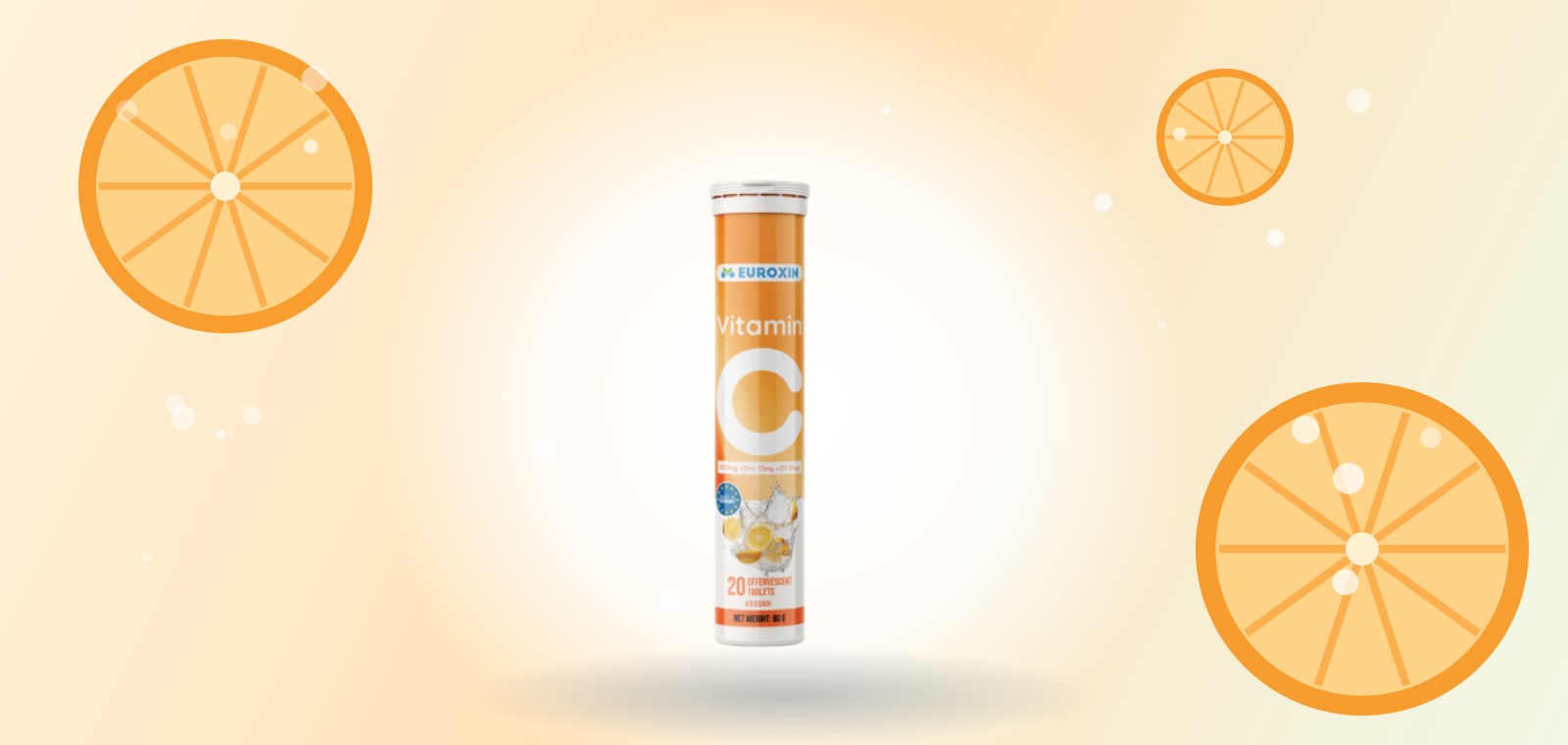
Euroxin offers vitamin C in effervescent tablets, tablets and combinations. Product specifications and certificates of analysis are available to healthcare professionals on request. Contact us or see our products.
Note: This article summarises published research for healthcare professionals. It does not replace clinical judgement or official guidelines and does not make health claims for any specific product.
Sources
- Hemilä H., Chalker E. Vitamin C reduces the severity of common colds: a meta-analysis. BMC Public Health, 2023. DOAJ record
- Hemilä H., Chalker E. Vitamin C for preventing and treating the common cold. Cochrane Database of Systematic Reviews, 2013. Cochrane Library
- Lamontagne F. et al. Intravenous vitamin C in adults with sepsis in the intensive care unit (LOVIT). N Engl J Med, 2022. Summary
- Rowe S., Carr A.C. Global vitamin C status and prevalence of deficiency: a cause for concern? Nutrients, 2020. MDPI
- EFSA NDA Panel. Scientific opinion on dietary reference values for vitamin C, 2013. Summary
- NIH Office of Dietary Supplements. Vitamin C fact sheet for health professionals. ods.od.nih.gov
- Commission Regulation (EU) No 432/2012 establishing a list of permitted health claims. EUR-Lex