
Omega-3 fatty acids are among the most studied nutrients of the past two decades, and the research has become more nuanced. Large trials show where EPA and DHA make a difference, where results are mixed and why most of the world still falls short. Here is an evidence-based overview for physicians, pharmacists and nutrition professionals.
Key takeaways
- Most countries have low to moderate blood omega-3 levels. Only a few fish-eating nations, such as Japan, South Korea, Norway and Iceland, reach the desirable range.
- In 2025, 1 g of omega-3 per day slowed biological ageing by up to four months over three years in older adults (DO-HEALTH, Nature Aging).
- Heart results depend on dose, formula and who takes it. High-dose purified EPA helped high-risk patients; standard doses in healthy people show smaller or mixed effects.
- EFSA considers up to 5 g of EPA and DHA per day safe for adults, and 250 mg per day sufficient for normal heart function.
Why omega-3 matters
EPA (eicosapentaenoic acid) and DHA (docosahexaenoic acid) are long-chain omega-3 fatty acids found mainly in oily fish and algae. The body can make only small amounts from plant omega-3 (ALA), so intake from fish, algae oil or supplements is important. DHA is a key building block of the brain and the retina.
In the European Union, for example, the following health claims are authorised under Regulation (EU) No 432/2012:
- EPA and DHA contribute to the normal function of the heart (with a daily intake of 250 mg EPA and DHA).
- DHA contributes to the maintenance of normal brain function and normal vision (with a daily intake of 250 mg DHA).
- Maternal DHA intake contributes to the normal brain and eye development of the foetus and breastfed infants (200 mg DHA in addition to the recommended daily intake).
- EPA and DHA contribute to the maintenance of normal blood triglyceride levels (2 g per day) and normal blood pressure (3 g per day).
How well supplied is the world?
The Omega-3 Index measures EPA and DHA in red blood cells. Above 8% is considered desirable; 4% or below is considered very low. The “Omega-3 world map: 2024 update”, published in Progress in Lipid Research, pooled data from 342,864 people in 48 countries:
- Desirable levels (above 8%): Japan, South Korea, Iceland and Norway, all countries with high fish consumption.
- Very low levels (4% or below): countries such as Iran, Egypt, India and Brazil.
- Most other countries, including much of Europe and North America, sit in the low to moderate range.
The authors estimate that raising the index from 4% to 8% takes about 1.4 g of EPA and DHA per day. They also point out that data from Asia, Africa and Latin America are still scarce. Clinically, this means most patients are unlikely to reach recommended intakes without eating oily fish regularly.
What recent research shows
1. Biological ageing (DO-HEALTH, Nature Aging, 2025)
In the European DO-HEALTH trial, 777 adults over 70 in Switzerland took 1 g of algae-based omega-3 per day, vitamin D3, a simple home exercise programme, or combinations, for three years. Omega-3 slowed biological ageing by up to four months on several epigenetic clocks. Combining omega-3, vitamin D and exercise was even more effective on one of the clocks. The researchers call it a promising first signal that needs confirmation.
2. Heart: dose and formula matter
In REDUCE-IT (NEJM, 2019), 4 g per day of highly purified EPA reduced major cardiovascular events by 25% in high-risk patients with raised triglycerides who were already taking statins. The STRENGTH trial, which used 4 g of an EPA and DHA mixture, was stopped early in 2020 because it was unlikely to show a benefit. In the VITAL trial of healthy older adults, 1 g per day did not significantly reduce major cardiovascular events overall, although heart attacks were less frequent.
3. Heart rhythm: a point to watch
Several analyses have linked omega-3 supplements, particularly above 1 g per day, to a modestly higher risk of atrial fibrillation. A large UK Biobank study (BMJ Medicine, 2024) of 415,737 people found that regular fish oil use was associated with a 13% higher risk of atrial fibrillation in people without heart disease, but with lower risks of disease progression in people who already had heart disease. The study was observational and did not record doses, so it cannot prove cause and effect.
Where expectations should be realistic
Omega-3 is not a replacement for medical treatment. The clearest benefits come from closing a real gap in intake and from high, targeted doses used under medical supervision. For everyday use, moderate doses that bring intake up to recommended levels are the sensible approach.
What current guidelines recommend
- European Food Safety Authority: 250 mg EPA and DHA per day as an adequate intake for adults; up to 5 g per day of supplemental EPA and DHA combined raises no safety concerns for adults (2012).
- Pregnancy and breastfeeding: an additional 100–200 mg of DHA per day on top of the adult intake is widely recommended.
- Fish intake: many health authorities recommend one to two portions of fish, preferably oily fish, per week.
Implications for practice
- Assess intake first. Patients who eat oily fish less than once a week are unlikely to reach 250 mg of EPA and DHA per day.
- Look at EPA and DHA, not fish oil weight. A 1,000 mg fish oil softgel can contain anywhere from about 300 mg to 750 mg of EPA and DHA, depending on concentration.
- Separate nutritional and therapeutic doses. 250–1,000 mg per day suits general intake. 2–4 g per day is used for raised triglycerides under medical supervision. Outcome data for cardiovascular risk reduction in high-risk patients on statins exist for purified EPA (icosapent ethyl), not for standard fish oil.
- Consider heart rhythm and bleeding. The atrial fibrillation signal is strongest above 1 g per day. At high doses, consider bleeding risk in patients taking anticoagulants.
- Special groups. An extra 100–200 mg of DHA per day is recommended in pregnancy and breastfeeding. Algae oil provides EPA and DHA for vegetarian and vegan patients.
- Quality. Low oxidation values and the triglyceride form are useful quality markers when recommending a product.
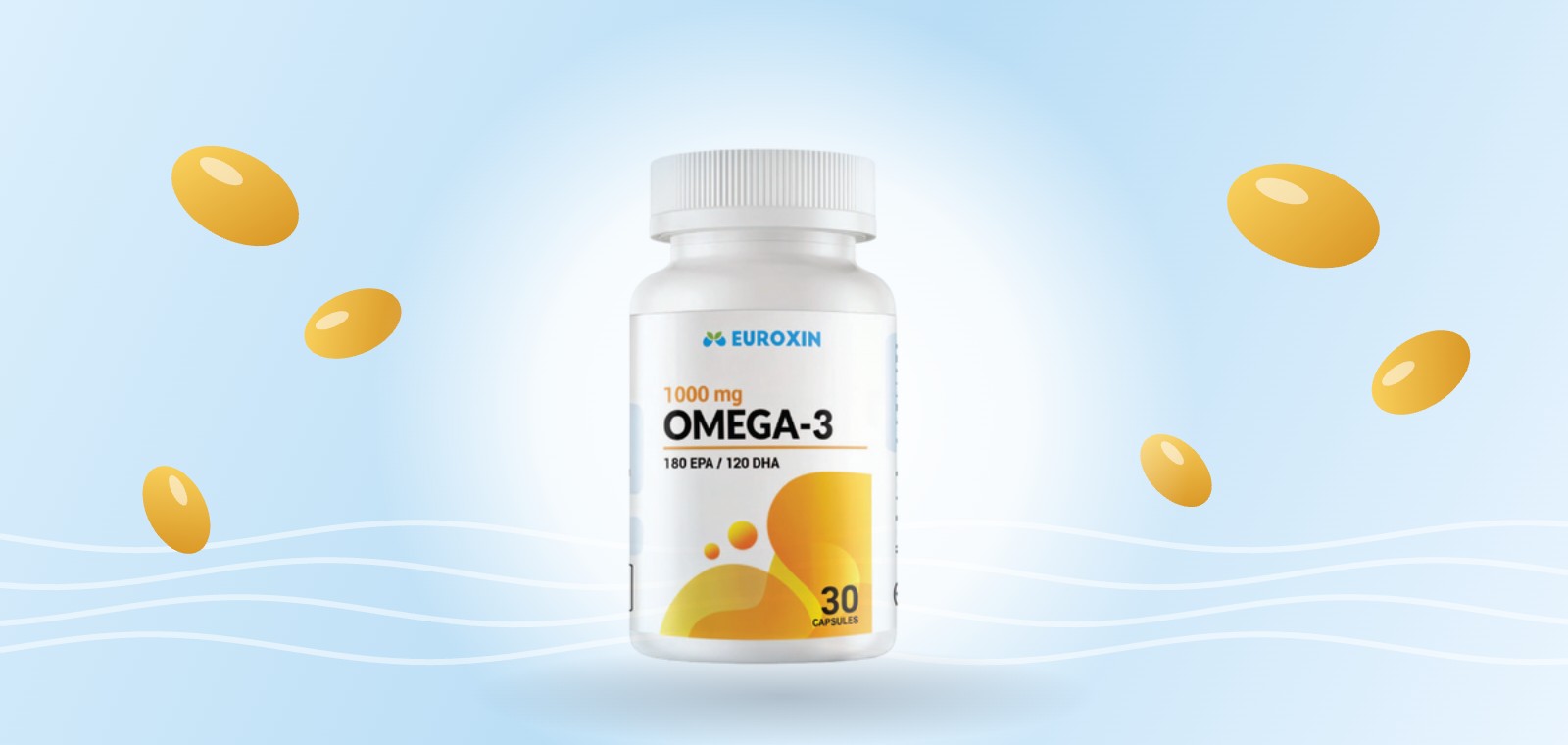
Euroxin offers omega-3 softgels in several strengths and combinations. Product specifications and certificates of analysis are available to healthcare professionals on request. Contact us or see our products.
Note: This article summarises published research for healthcare professionals. It does not replace clinical judgement or official guidelines and does not make health claims for any specific product.
Sources
- Bischoff-Ferrari H.A. et al. Individual and additive effects of vitamin D, omega-3 and exercise on DNA methylation clocks of biological aging in older adults from the DO-HEALTH trial. Nature Aging, 2025. University of Zurich summary
- Schuchardt J.P. et al. Omega-3 world map: 2024 update. Progress in Lipid Research, 2024. Summary
- Bhatt D.L. et al. Cardiovascular risk reduction with icosapent ethyl for hypertriglyceridemia (REDUCE-IT). N Engl J Med, 2019. NEJM
- Nicholls S.J. et al. Effect of high-dose omega-3 fatty acids vs corn oil on major adverse cardiovascular events (STRENGTH). JAMA, 2020. JAMA
- Manson J.E. et al. Marine n-3 fatty acids and prevention of cardiovascular disease and cancer (VITAL). N Engl J Med, 2019. NEJM
- Chen G. et al. Regular use of fish oil supplements and course of cardiovascular diseases: prospective cohort study. BMJ Medicine, 2024. UK Biobank
- Gencer B. et al. Effect of long-term marine omega-3 fatty acids supplementation on the risk of atrial fibrillation in randomized controlled trials of cardiovascular outcomes. Circulation, 2021. Circulation
- European Food Safety Authority. EFSA assesses safety of long-chain omega-3 fatty acids, 2012. EFSA
- Commission Regulation (EU) No 432/2012 establishing a list of permitted health claims. EUR-Lex